Thinking and feeling: what’s the difference?

Article is reposted from the Futurelearn blog

Professor Mark Solms is the lead educator on the University of Cape Town’s free online course “What Is a Mind?” Here, he discusses the difference between thinking and feeling, and the role that instinct plays.

professor-mark-solms-2

The distinction between thinking and feeling (cognition and emotion) is obviously a fundamental one in relation to what the mind does. One of the themes that I’ll develop in “What Is a Mind?” is the notion that feelings present problems. That is, they represent needs; they represent demands upon the mind to perform work.

Feelings make us aware that something unexpected (or something unpredicted or something uncertain) is occurring. When I say that feelings represent demands upon the mind to perform work, what I mean is that they represent demands on thinking. The work of the mind is thinking.

Thoughts are ways of dealing with feelings

In the primary case, in the standard situation, feelings come first. Thoughts are ways of dealing with feelings – ways of, as it were, thinking our way out of feelings – ways of finding solutions that meets the needs that lie behind the feelings.

The feelings come first in both a hierarchical and a chronological sense. A little neonate (newborn mammal) has no thoughts to speak of, to begin with; it is a little bundle of feelings. Thinking derives from learning, that is, from experience.

The apparatus for thinking then works on the material we have internalised, from the solutions we’ve experienced, as to how our needs can be met in the world. These solutions are, of course, initially provided by caregivers. (That is why parenting is important.) On this basis, thinking gradually develops and teaches us how to manage our feelings – how to solve the problems that feelings represent.

Thinking can become very elaborate

Once that has happened, though, thinking can become very elaborate. To mention just the most obvious case, a thought, which has developed in relation to a particular feeling, can be re-thought.

If that thought is activated from thinking itself, it can, in turn, reactivate the feeling that goes with it, especially if it’s a thought (that is, a problem-solving process) that has not properly mastered the feeling in question. That will reactivate the feeling. So, later in development, thinking can make feelings come second. But that’s a derivative process, once a mature thinking apparatus exists.

Thoughts are internalized experiences

We must remember that thoughts are just an internalized version of our perceptual experiences of the world. All thoughts, as distinct from feelings, have a perceptual format that is derived from sensory images. (This applies also to thinking in words.) They are internalisations of our experience of the world; what Freud called the “reality principle”.

So when we are feeling our way through a problem using thoughts, we are, as it were, feeling our way through a virtual form of reality, feeling our way through representations of reality.

The function of thinking, in this sense, stands for reality. It’s a virtual space in which we can work out, in the safety of our minds, what to do in relation to reality, before we actually put solutions into effect. In short: thoughts are interposed between feelings and actions.

Thinking and doing overlap

There is also an important overlap between thinking and doing in the world. One consequence of this overlap is that we might, in our doings in the world, avoid certain situations and certain places – for example, dizzying heights – because they make us feel something untoward (in this case, fear): “I won’t go there because I know that if I go there, I’m going to feel scared.”

That’s what the thought is doing, that is the work it performs. It guides what you do and don’t do in relation to feelings that arise from virtual actions. That’s one of the ways in which someone might develop, for example, a phobia. There are all sorts of complicated mental gymnastics that we get up to on the basis of the processes I’ve just described.

Thinking is a refinement of instinct

This leads me to the topic of instincts. We do not have to work out our own solutions to all of life’s problems on the basis of experience. In addition to what we work out for ourselves, and what our parents teach us, we also have certain in-built solutions to problems of universal biological significance.

These solutions apply to things we cannot afford to learn from experience. For example: “I wonder what will happen if I jump off this cliff?” The answer to that question would be the very last thing you learn. Thank heavens for instincts!

But there are many, many problems that cannot be predicted by evolution (what happens if you poke your finger in an electric socket, for instance) and for these problems we need to learn from experience. The in-built solutions are too general and crude.

There are more problems in the world, by far, than there are instincts. So the instincts need to be extended and elaborated, to cope with real-life situations in all their complexity. For that reason, thinking not only interposes itself between feelings (in general) and actions, but also between instinctual feelings and the automatic responses they would release. Thinking generates more nuanced action options.

So – in general – thinking develops in order for us to manage feelings (and the needs they represent) in more flexible ways than our in-built instincts provide. Thinking is a refinement of instinct.

Feelings are not always bad things

What I have said might give the false impression that feelings are always bad things – but they aren’t. Thinking tells you what action will deliver maximal pleasure just as much as the opposite. In the course, we’ll delve more deeply into these workings of the mind, and how pleasure and unpleasure relate to thoughts and feelings.

I mustn’t try to cover everything before we have even begun…

Want to know more? Read Professor Solms’s previous post for the FutureLearn blog or join the free online course “What is a Mind?”

Facilitating extraordinary conversations

Steven Reid UCT MOOC

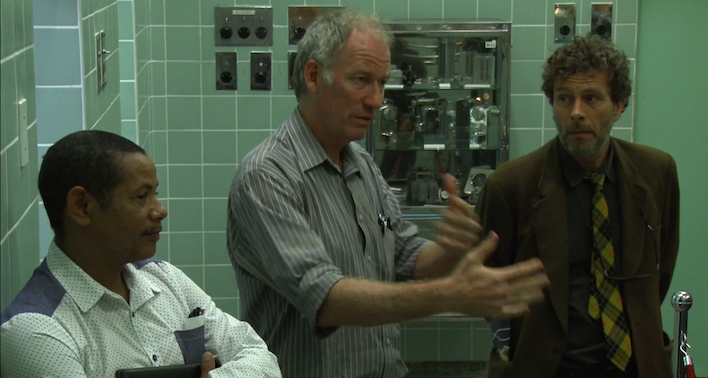
From left: Stanley Henkeman, Prof Steve Reid (lead educator) and Dr Peter Anderson 

Earlier this year the first two UCT MOOCs, Medicine and the Arts and What is a mind?, launched on the the FutureLearn platform. The next iteration of Medicine and the Arts starts on 21 September 2015 – sign up here. With several more courses in production, we are reviewing what we are learning about designing and delivering open online courses through analysing the participant interactions, survey responses and data analytics generated during the course run.

Reach and coverage

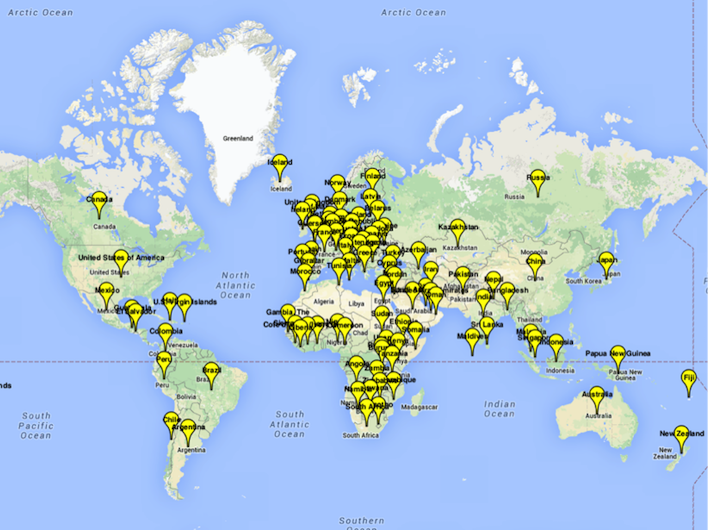
Enrolments across the  two courses attracted  more than 20 000 people, who came from an interesting diversity of backgrounds – not only geographically (participants came from over 120 countries – see map below), but also with different perspectives and contexts.  For example, in the Medicine and the Arts course, significant numbers of patients, as well as the expected healthcare practitioners and artists joined, making for rich sharing of experiences and perspectives.  Compared to other FutureLearn courses, UCT courses have attracted a higher than usual proportion of South African participants – 21% (Medicine and the Arts) and 14% (What is a mind?).

reachandcoverage

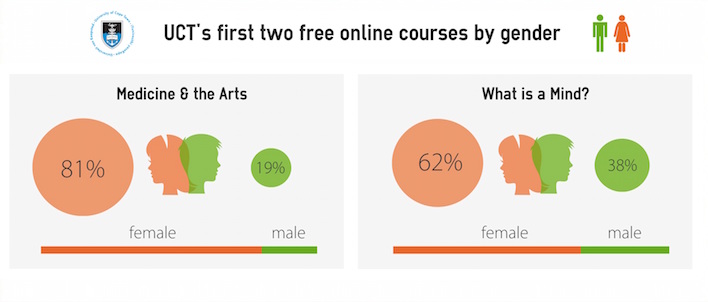
There was a full spectrum of ages (from teens to retirees), but more women than men joined the UCT courses (62% for What is a mind?  and  81% for Medicine & the Arts), and  consistent with other sources, the majority of people already had university degrees.

moocsgender

Scale of participation

The taught Masters course upon which the Medicine and the Arts MOOC is based normally enrols up to 20 postgraduate students each time it runs.  The MOOC, which takes a small selection of the topics and introduces the medical humanities, had more people fully participating than the academics are likely to reach in many years of teaching the face-to-face masters module.

Participant interactions

Creating and running this Massive Open Online Course (or MOOC) was a new experience for the course team. Lead educator Professor Steve Reid wrote to participants after the last week of the course ”Even as we head towards the end of the course this is just the beginning in some ways: new ideas and connections, new ways of thinking, and for us new ways of teaching and learning over the internet, are the start of new projects and different ways of doing things”.

In the words of Medicine and the Arts course participant, Cilla Sparks, I have so enjoyed the breadth of this course, the bringing together of so many diverse perspectives. This “cross fertilisation” has given me many new ideas to explore around creativity, play, epigenetics, ancestry, linguistics and, above all, the interconnectedness of our minds, bodies and souls, as well as our whole planet. Not bad for a 6 week course!  And Samantha Clark said  “I love(d) the fact that people from around the world with different experiences, from different backgrounds and from different specialities can come together to discuss the same topics and learn from each other.               

The high level of social learning in the courses was surprising and rewarding. Even with large numbers, there was still traditional cohort behavior – with students logging on at the beginning of modules, participating in active online discussions in response to video lectures and reviewing each others’ assignments.  

Deep engagement with the content was evident – for example, Italian doctor, Andrea Mazzella  made the most ‘liked’ comment made during the the course:

Many are interpreting “medical humanities” as a way of making modern medicine more humane, because it is allegedly technology-bound, hyperspecialised and distant from the actual people and their problems. As a junior doctor I can say that this should be only part of the field’s aim, also because – let’s not forget – technology, drugs and specialisation are a great advance to medicine, which would have dramatically fewer options if they did not exist.

In my opinion this field is concerned with this question:

“How does society handle the concepts of illness, disability and death, and how can people be prepared for the inevitable manifestation of these?”

As expected, with the voluntary low stakes MOOC format, there were many who did not complete the entire course, but comments from those who did are an indication of the value of open learning, and demonstrate the positive exposure for UCT :

This was my first online course (as well as my first course in the past few years in general, as I usually put them together and follow them through with students of my own). Still, I have to say that my expectations for the next course have been considerably raised after six weeks of stimulating and inspiring videos, articles, ‘conversations’ and comments of other course participants. A big thank you to all of you and to our educators from UCT! (Iva Bura, Croatia)

This course has been very interesting and has definitely shaped the way I view patients in the medical profession. I’ve now realized how distant one can be when working with people with medical conditions and through this course I have grown to love and consider the social aspect of patients as being crucial to advancing the care that they receive. A big thank you to Prof Reid and his team for pulling off this amazing course. I happy to add yet another UCT course behind my name. (Mapitso Thaisi, South Africa)

These observations and reflections help us learn about designing online learning in formal and informal contexts. CILT’s role has been to help the academic course conveners design engaging learning pathways through an online course at scale and to create short, powerful video lectures for use in this environment. The experience and skills being gained in the partnership between the learning designers, video producers and academics in the course creation teams has already been useful in thinking about mainstream provision for online courses at UCT.  In the words of Associate Professor Susan Levine, co-convener of Medicine and the Arts,  As the first MOOC (Massive Open Online Course) to be offered by UCT, we have been very encouraged by its success, and it will have a definite impact on our teaching from now on. Our face-to-face students on the same course have given us the opportunity to compare learning online with that of the classroom, and the differences are fascinating.