

Medicine and the Arts begins

UCT MOOCs Medicine and the Arts

The idea for UCT’s first free online course Medicine and the Arts: Humanising Healthcare was born following the success of an interdisciplinary Masters course, Medicine and the Arts. Why not share this incredible line-up of the university’s academics as a Massive Open Online Course (MOOC), asked the Vice Chancellor? After a nine months gestation UCT, partnering with FutureLearn, launched Medicine and the Arts: Humanising Healthcare. And what a healthy beginning it has been. Hosted on the international MOOC platform, FutureLearn,  the free online course went live on 16 March 2015 with 7 700 learners enrolled.

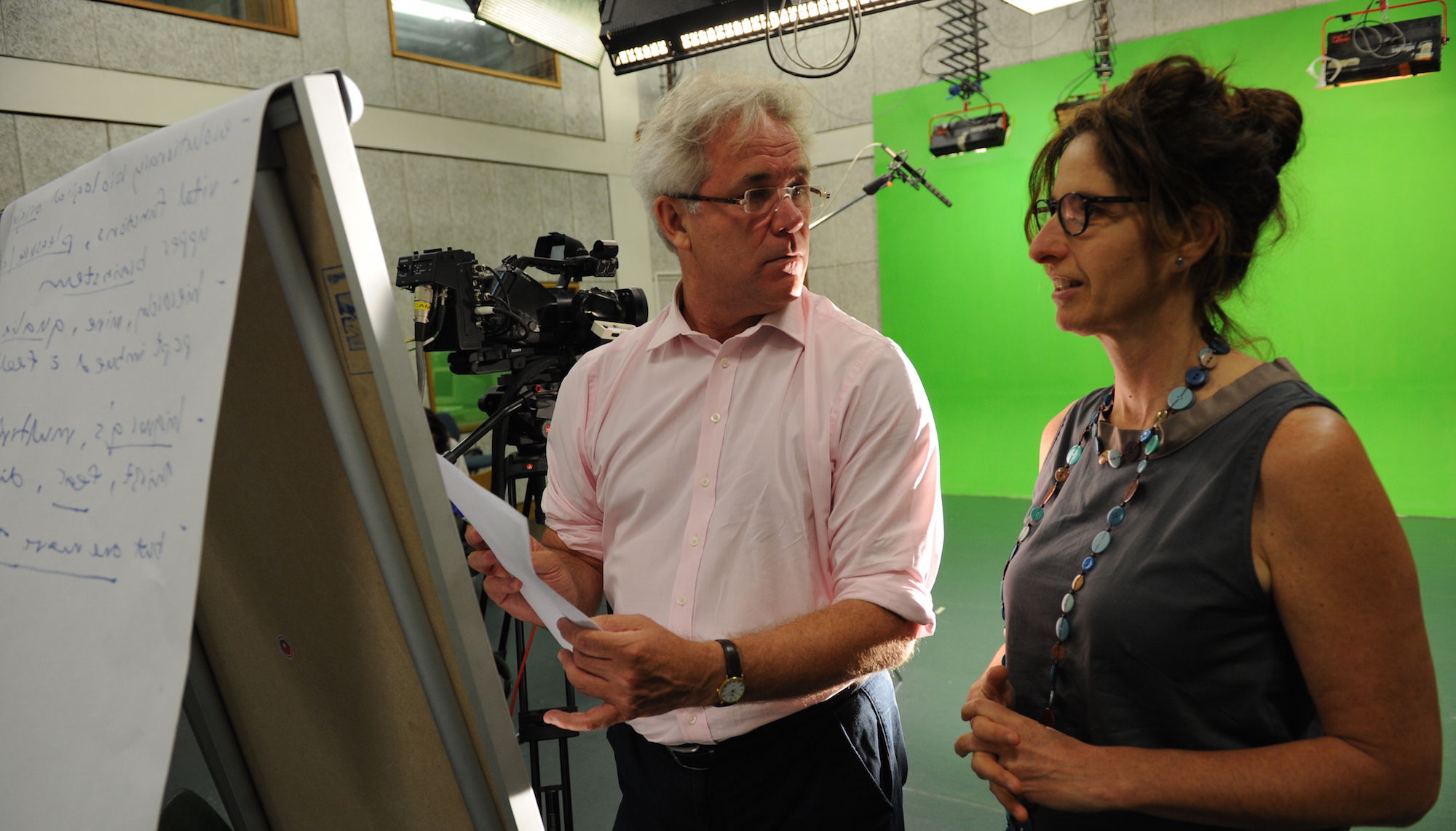
The original Masters course, Medicine and the Arts was developed by anthropologist Associate Professor Susan Levine and medic Professor Steve Reid in 2014. As they explain in a blog post on the FutureLearn platform, one of their goals was to promote the emerging field of Medical Humanities, with a particular emphasis on what this means in a developing country context. It has involved considerable effort to redesign the Masters course for a larger general audience, with the academics working with a team of learning designers and video production staff from the university’s Centre for Innovation in Learning and Teaching (CILT). Yet this has been very rewarding, drawing in perspectives from participants from around the world.

After two weeks, what can we say about the course?  In the first week, over 2300 people took part in an animated discussion about what medical humanities is and why it might be important. As lead educator, Steve Reid commented after the first week in his email to participants: The online space is a new and exciting one, with the strangeness of never meeting most of you physically, but it allows us to have a series of extraordinary conversations, that are located precisely in that inter-disciplinary space that we were aiming for. And so too with the online course process, there is the vague sense that because it is online and we do not meet in the flesh, it is “unreal”.  However the online discussions and responses are strikingly authentic and personal, and in some ways are more real than the somewhat contrived presentations in the videos, since they are dealing with your real experiences in hundreds of different situations.

Learning in a global space has led to transformations in personal world views. Participants  from the UK have expressed amazement about some of the realities of healthcare in developing countries, with  the need for heart valve transplants in week one and  the incidence of TB and the difficulties of treating sick children with poor socio-economic backgrounds in week 2 coming to the fore. Learners from developing countries including Mexico, Brazil, India, Sudan, Afghanistan, South Africa and Kenya have shared details about their local context showing that while there may be difficult problems and resource constraints, concerns about humanising healthcare are common across geographical and economic locations.  

Over three thousand people interacted with the material in the first two weeks. Comments and discussions saw extraordinary exchanges between people from across the world (over 100 countries) and out of various disciplinary perspectives (nurses, doctors, patients, occupational therapists, homeopaths, musicians, art therapists, carers working with the elderly, with children, with the mentally ill and with the terminally ill). Participants have shared their healthcare responses with some writing poetry in response to UCT professor and poet Peter Anderson’s guest lecture on the ‘heart of art and literature’.

The diverse course participants include school-going youth, university students, working professionals, people at home dealing with illness and retired people. At the end of week two’s  module on ‘Children’s voices and healing, Susan Levine reflected:  I am struck by the intimate stories many of you have shared. Irrespective of whether you are a nurse, artist, social worker, speech pathologist, psychologist, medical doctor, musician, public health worker, journal editor, academic or from any other other profession, all of you in one way or another were able to step into an interdisciplinary framework and consider the importance of listening to what children have to say about their treatment, illness, and how they face the prospect of death and dying.

As we move through the course, we look forward to richer discussion and greater sharing of experiences.  For UCT, the launch of the MOOC  has achieved one of our stated objectives: to ensure that the knowledge offered in these digital education environments is not only of and about the developed world. We’ve made a healthy African footprint in the global world of MOOCs. There are more courses in production – so watch this space!
Evaluating UCT MOOCs: a strategy for learning

UCT

Associate Professor Suki Goodman from the School of Management Studies reflects on UCT’s decision to offer Massive Open Online Courses in the context of global changes in higher education that are increasingly mediated by technology and the internet. She talks specifically about the necessity of evaluating and monitoring this process so that lessons, learning and feedback can be applied to UCT’s broader offerings in face to face, blended and online teaching and learning contexts. This post is an edited version of a speech given at the UCT MOOCs launch event on 24 February 2015.

The writing is on the wall, or more appropriately the dashboard. The world is changing, everything is moving, the rate of change accelerating and technology is the engine driving it all. What a few years ago was fantasy and Sci-fi is currently being operationalised. The educational revolution, the revolution in education is happening, it’s happening now.

The introduction of the massive open online courses (MOOCS) and other UCT online investments like the Faculty of Commerce’s online Postraduate diplomas means that we retain our currency. We showcase our capacity to play in this space, a space occupied by the biggest and the best universities in the world. This allows us to contribute to the global conversation in education taking place.

The most successful institutions of higher learning in the future will also be the ones most advanced and proficient in online – those that know how to maximise the power that this space has to offer. And that maximisation will ultimately come from academics, learning practitioners and educational researchers reflecting on and refining what works, how it works, and what takes for it to work – for people to learn in virtual environments. They’ll need to ask questions pertaining to sustainability and revenue generation, how this revolution changes what we know about best practice in teaching and learning, how can it help us prepare scholars to enter universities better equipped, how we manage fulcrum transition points like the transition from UG to PG, what can we do about throughput that we haven’t been able to do before….and these are just some of the emerging questions!

Throughout our team’s development of an evaluation strategy with the Centre for Innovation in Learning and Teaching’s (CILT) MOOC Implementation team we have found an underlying motivation gravitated towards these questions: how we use this opportunity of developing UCTs first MOOCs to master aspects of the online learning territory, so that we can ultimately all benefit from new-look pedagogy – pedagogy that can feed into residential, blended and online teaching. There’s a recognition that teaching excellence now, already, and guaranteed into the future is going to be heavily influenced by our ability to harness the available technology and the sooner we learn how to harness it for the good, to learn how to learn, to learn how to bring about learning the more successful we are likely to be.

So the MOOC project means that, for example, the staggering science involved in Prof Mark Solms’ neuropsych work – science that is changing how we will eventually understand what it means to be human – is available, accessible and open to an ever increasing audience in the form of the free online course What is a mind? That in and of itself is a spectacular thing.  

But also impressive are the massive “behind the scenes scenes” –  the  internal developing and unfolding processes that are being bedded down to make these MOOCS happen – the across university interactions, the horizontal and vertical networks of stakeholder engagements, the project management, CILT’s learning design team bedding down into the belly of the institution to the heart of departments’ core business of translating research into teaching not to mention the the mapping and managing of new data points, the analyses of new sets of learning analytics and…much more.

Our evaluation strategy is designed to give some structure, some framing to all this other stuff and the strategy demands that at every level of the UCT MOOC project stakeholders measure, monitor and reflect on MOOC performance and the initiatives emerging outcomes.

And even here in the behind the scenes are innumerable opportunities to generate new knowledge and contribute to science, the science of effective teaching through the online medium. As evaluators we surfed the boundaries of our own evaluation discipline to find a strategy that made sense in this complex dynamic intervention

For a large, heavy and in many ways “old-school institution” like UCT the agility required to be successful in MOOC-land constitutes a significant departure from many aspects of business-as-usual…but perhaps it is in the vision and implementation of these new ways that continued flourishing of this great academy is fortified and with that the assurance that we keep on trending.

The Making of a MOOC

UCT making of a mooc

Medicine and the Arts: Humanising Healthcare (#FLMedArts) has just opened for enrollment on the FutureLearn Platform. What a journey it has been for us developing UCT’s first free and open course on a major MOOC platform! One of our academics summed it up brilliantly when he told us:

“I agreed to this because I thought it would involve making two or three 15 minute lecture videos. But it’s a bit like having children,isn’t it? If we knew exactly what it entailed, we may not have agreed to it in the first place. It’s been great fun though, so I don’t regret it.”

As first-time MOOC-makers, the one constant in our lives is that we’re learning. We’re learning about how learning design for MOOCs is different to that of traditional courses. One of these distinctions is that we’re designing for a massive audience – not only massive numbers but also likely to be massively varied in terms of background, education level and motivations for joining. This involves balancing the course objectives set out by the academics with the expectations of our extremely broad audience. Not an easy task.

The creation of MOOCs involves a team of people. To make this work we’re having to consider new ways of managing the development process. How should our team be structured? How do we allocate work and manage workflow? At which points do we ask for feedback? Different MOOCs have required slightly different processes as the people we work with have different ways of doing things. We are continually grappling with what development processes would make it slightly easier next time around and how to share this within the team.

Along the way, we’re also deepening our knowledge as a byproduct of our engagement with leading academics and professionals. We have gained insights and perspectives on complex problems in healthcare from people with different disciplinary approaches. In one week we had the chance to talk with with a medical anthropologist, radio producer and paediatric oncologist. They were each telling us how, using very different approaches, they help make children’s voices heard in hospitals where they may ordinarily be ignored. This has an incredibly important role in the healing process. And these are the insights we are keen to be sharing with our MOOC participants.

So making MOOCs can be a lot like having children. With the first one, you’re not quite sure what you’re getting yourself into. You learn on the job – very quickly – and it’s a lot of hard work. But it is all incredibly rewarding.

Funnily enough the gestation period of Medicine and the Arts: Humanising Healthcare is about 9 months. It’s been 6 months since we started, with 3 to go until our launch date on 16 March 2015. Until then, we continue the preparations into our final trimester, trying to “keep calm and check the schedule”, as our production manager Antoinette would say.

Join us at the finish line, of what’s panning out to be an incredibly exciting journey – View the trailer video and enroll now.